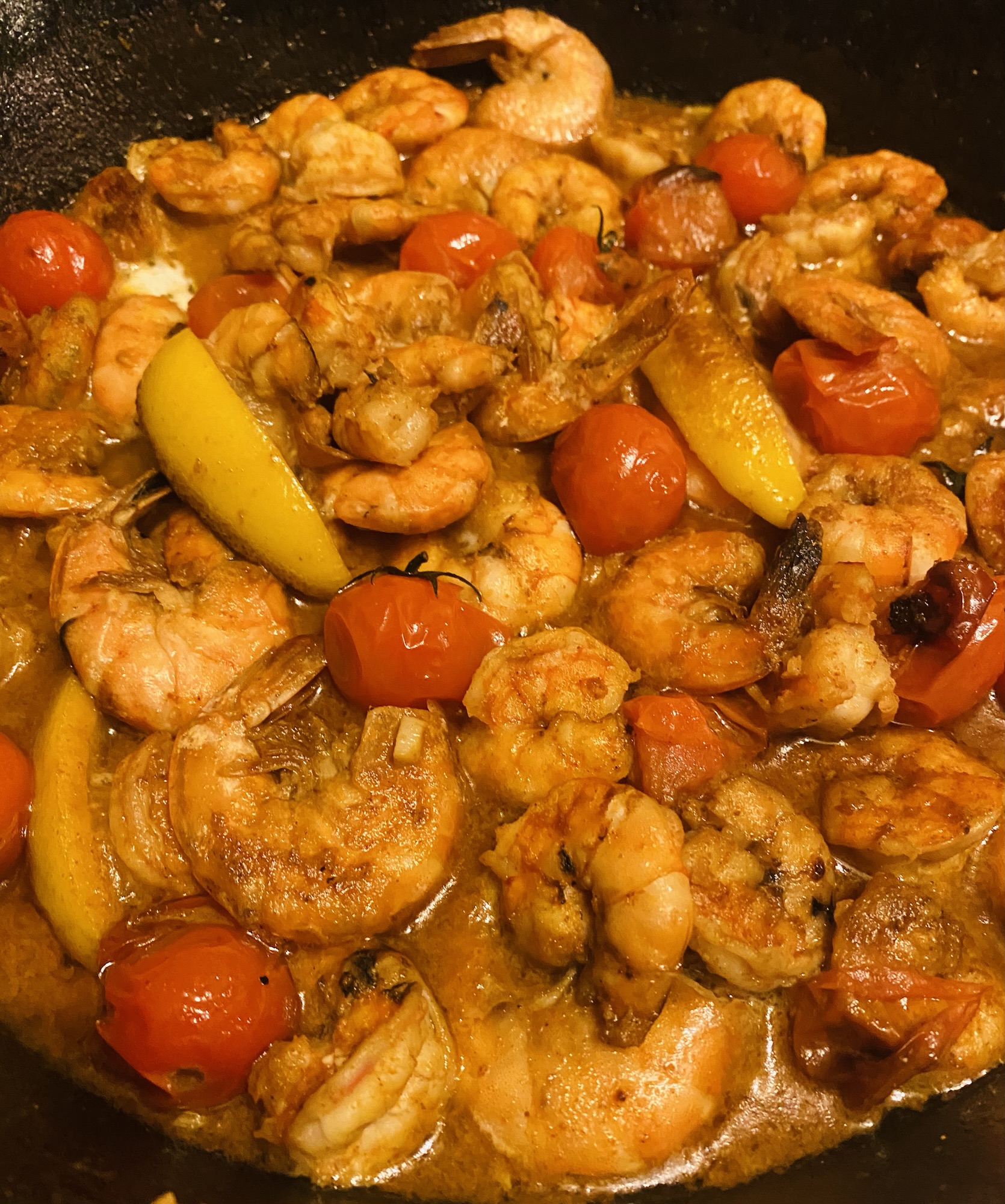
Sweet shrimp seared in lemon-infused butter and olive oil, then finished in a silky white wine pan sauce with blistered tomatoes, garlic, and a touch of red pepper flakes.


Featured Standouts
Shrimp
The shrimp provides the primary protein and a delicate sweetness. Its quick-cooking nature is ideal for a fast weeknight meal. When seared in the lemon-infused butter, the shrimp immediately begins to absorb the bright, savory flavors of the pan sauce, ensuring every bite is succulent.
Cherry Tomatoes
These small, vibrant cherry tomatoes are essential for both texture and flavor. Added to the hot skillet, they soften and blister, their skins gently giving way under the heat. This process releases their natural, concentrated sweetness and juice, which acts as a counterpoint to the sharp garlic and the dry wine sauce.
Garlic
Garlic is the indispensable aromatic that provides the deep, savory, and warming flavor that anchors the buttery pan sauce. Gently sautéed until fragrant, the garlic’s powerful essence permeates the oil and butter, forming the aromatic foundation upon which the entire dish is built.
Lemon
The use of lemon is the key to the dish’s signature freshness. By frying the lemon slices first, the process infuses the butter with bright citrus oils before any other ingredient is added. These fragrant oils are then carried through the entire dish, creating a vibrant, zesty layer of flavor that cuts through the richness of the butter an
TIPS & TRICKS FOR THE BEST SHRIMP AND TOMATOES
Dry the shrimp before seasoning
Moisture is the enemy of a good sear. Pat the raw shrimp thoroughly with paper towels before you apply any seasoning. Any residual water will rapidly cool the oil and the pan, causing the shrimp to steam in their own liquid, resulting in a rubbery texture and a pale appearance.
Use a hot pan when cooking the shrimp
The goal is to cook the exterior quickly to achieve a beautiful golden-pink color and crust while keeping the interior tender and juicy. Use a high-smoke-point oil (like canola, grapeseed, or clarified butter) and let the pan get genuinely hot, almost to the point of shimmering, before adding the shrimp.
Do not overcrowd the skillet
If you pile too many shrimp into the pan at once, the temperature of the oil and the pan will drop dramatically. This releases moisture from the shrimp, creating steam. Instead of searing, the shrimp will end up poaching, leading to the issues described above. Work in batches if necessary, ensuring there is a bit of space between each shrimp. This allows the heat to circulate properly, ensuring every piece develops that desired crust and cooks evenly.
Let the tomatoes sit in the pan without stirring constantly
The intense, dry heat of the pan is crucial for transforming the tomatoes. By resisting the urge to stir them constantly after adding them to the pan, you allow the side touching the pan to caramelize and slightly burst or blister. This process concentrates their natural sugars, intensifying their flavor from simple acidity to a deep, savory sweetness that forms the complex backbone of your sauce. A quick toss every few minutes is enough to ensure even cooking without hindering the blistering process.
Add the final butter at the end of cooking to create a smooth, glossy sauce instead of an oily one.
This technique is known as mounting the sauce with butter. By incorporating a cold pat of butter (or two) right after you remove the pan from the heat, and swirling it in, you emulsify the residual cooking liquid and the butterfat. This action thickens the sauce slightly, giving it a rich, velvety texture.
Inclusive Adaptations
Reduce the sea salt significantly
Or omit it entirely. Instead of relying heavily on salt for flavor, lean into natural, vibrant alternatives.
Maximize the use of fresh lemon juice and zest.
The bright acidity of lemon is a powerful flavor booster that provides a similar perception of flavor intensity to salt. Use lemon juice generously as a finishing touch, and consider adding the zest earlier in the cooking process for a deeper infusion of citrus oil.
Increase the reliance on fresh garlic.
Garlic, especially when lightly sautéed until fragrant, adds a crucial depth and savory foundation. Use pre-minced or freshly minced garlic liberally.
Incorporate other herbs and spices.
Consider adding a pinch of crushed red pepper flakes for warmth, or a mix of dried oregano and basil to complement the tomato and shrimp. Fresh parsley or cilantro, stirred in at the very end, brightens the dish and enhances the overall aroma.
Use additional good quality olive oil
To sauté the aromatics and finish the sauce. Olive oil adds a fruity note and contributes beneficial monounsaturated fats.
Use a certified dairy-free butter alternative.
There are many excellent plant-based butter sticks or spreads available that mimic the richness and mouthfeel of traditional butter without the dairy content.
For added richness without dairy
A small amount of full-fat coconut cream (not milk) can be stirred into the sauce at the end. Note: This will slightly alter the flavor profile.
Streamlining Preparation for Ease
Utilize pre-prepped ingredients to minimize physical effort and knife work. This is especially helpful for those with limited mobility, chronic pain, or who are new to cooking.
Use pre-peeled and deveined shrimp.
This completely eliminates the most time-consuming and often messy part of preparing shrimp. Look for frozen options, which are usually peeled and deveined before freezing.
Use pre-minced garlic or jarred garlic paste.
While fresh is often preferred, high-quality jarred or frozen minced garlic saves considerable time and eliminates the need for a knife and cutting board.
Opt for canned diced tomatoes or prepared tomato products.
Using a 28-ounce can of crushed or diced tomatoes instead of chopping fresh tomatoes reduces prep time and ensures consistent ripeness.
Choose easy-to-cut vegetables.
If adding other vegetables, select ones that can be quickly cut, like grape or cherry tomatoes (often just need halving) or pre-sliced mushrooms.
EQUIPMENT NEEDED TO MAKE THIS RECIPE
Cast iron skillet
Tongs
Cutting board
Chef knife
Wooden spoon or spatula
Measuring spoons
Measuring cup
Similar Ingredients To
Red Chili Lime Fried Shrimp
Cajun Black Pepper Shrimp
Za’atar Broiled Shrimp & Potatoes + Orange Pink Peppercorn Cocktail Sauce
Enjoy This Recipe With
GRILLED SHRIMP W/ CAJUN BUTTER
GARLIC BUTTER SHRIMP SCAMPI
RECIPE


Garlic Shrimp w/ Lemon Cherry Tomato Pan Sauce
Ingredients
Method
- Infuse the Oil: Heat a cast iron skillet over medium heat. Add half (2 Tbsp) of the butter and the olive oil. Fry the lemon slices until they are lightly browned and the butter stops sputtering. Remove the lemon slices and set them aside.
- Cook the Shrimp: Season the shrimp with 1 teaspoon each of the sea salt and black pepper. Add the seasoned shrimp to the lemon-infused oil and cook for about 3 minutes per side, or until pink and opaque. The exact time will vary based on the size of the shrimp. Remove the cooked shrimp and place it with the fried lemon slices.
- Blister Tomatoes and Sauté Garlic: Reduce the heat. Add the garlic and cherry tomatoes to the skillet. Cook for approximately 5 minutes, stirring occasionally, until the tomatoes begin to blister and deepen in color.
- Make the Sauce: Pour in the white wine and vegetable stock. Add the reserved lemon slices and the red pepper flakes. Bring the mixture to a boil, then reduce the heat to a simmer. Cook for about 5 minutes, allowing the sauce to thicken slightly.
- Finish the Dish: Stir in the remaining 2 tablespoons of butter. Return the cooked shrimp to the pan. Gently toss the shrimp and lemon slices so that everything is coated in the sauce and warmed through.
- Serve: Plate and serve immediately.
Leave a Reply