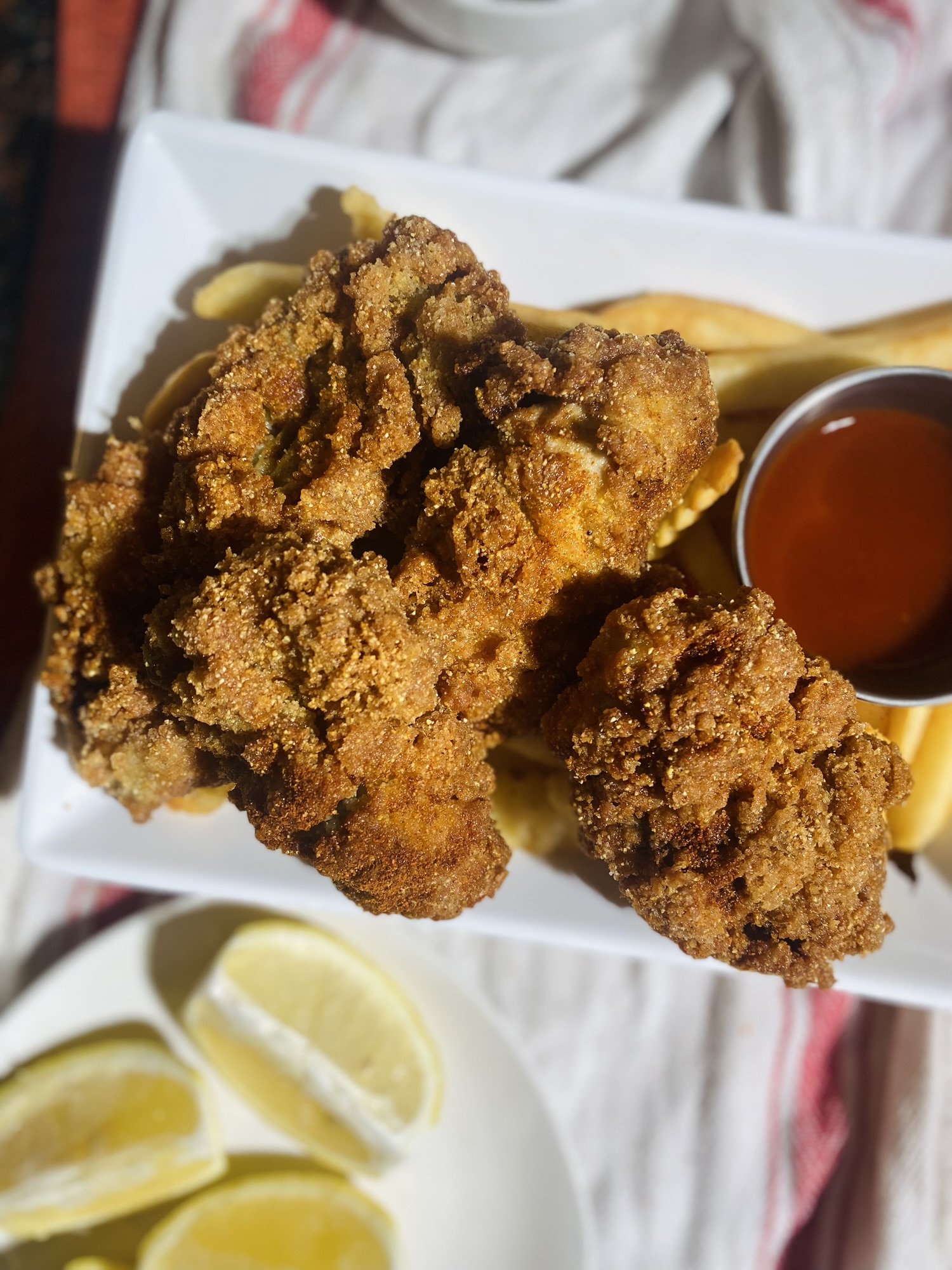
Southern style fried corn meal crusted oysters fried golden brown and dusted in spicy cayenne pepper
/jumptorecipe


FEATURED STANDOUTS
Oysters
The undisputed stars of the show, these briny, tender morsels burst with a delicate flavor of the sea. When perfectly fried, their subtle sweetness and rich, oceanic notes are amplified, making them an irresistible delicacy. Their inherent moisture content is key to achieving that succulent interior while the coating crisps to golden perfection.
Cornmeal
More than just a coating, cornmeal is the secret to achieving that quintessential Southern crunch. Its slightly gritty texture, when fried, creates a beautifully golden and audibly crisp crust that encases the tender oyster. It provides both structure to the coating and a pleasant, slightly nutty flavor that complements the oyster without overpowering it.
Egg
The egg acts as the crucial binding agent. It ensures that every grain of cornmeal adheres flawlessly to the oyster. Every speck of seasoning sticks perfectly as well. It creates a smooth, even surface for the coating to cling to. This results in a full, uniform crust that locks in moisture. It also prevents the delicate oyster from drying out during frying. Without the egg, the coating would simply fall away, leaving a less satisfying texture and flavor.
Cayenne
This fiery spice brings a vibrant kick. It adds a subtle depth of flavor that elevates the dish beyond a simple fried oyster. Cayenne introduces a gentle warmth that awakens the palate without overwhelming the delicate flavor of the oyster. It provides a nuanced heat that lingers pleasantly, inviting another bite and adding an exciting dimension to the overall profile.
Seasoning Salt
The foundation of a well-rounded flavor profile is seasoning salt. It layers in savory notes to enhance the natural taste of the oysters. It’s a blend designed to provide a harmonious balance of salt, herbs, and spices. Every bite is seasoned to perfection. This careful blend contributes to the overall deliciousness, making the oysters not just crispy, but deeply flavorful.
Garlic Powder
Offering a subtle yet impactful punch, garlic powder infuses each bite with a warm, aromatic essence. Garlic powder disperses evenly. It ensures that every part of the oyster’s coating carries that comforting, savory garlic warmth. It provides a foundational aromatic note. This note is both familiar and incredibly satisfying. This aroma contributes to the irresistible allure of perfectly fried oysters.
TIPS & TRICKS FOR THE BEST CAYENNE SOUTHERN FRIED OYSTERS
How to Get a Great Crust on Your Oysters
The secret to that irresistible golden, crunchy coating lies in a few key steps. First, the type of cornmeal you use makes a significant difference. Opt for a fine to medium grind cornmeal. This texture allows for better adhesion to the oyster and creates a more uniform, delicate crust. Coarse cornmeal can result in a more rustic, but sometimes less appealing, texture.
Make sure the oysters are exceptionally well-drained before dredging. Excess moisture is the enemy of a crisp crust. After shucking (or if using pre-shucked oysters), gently pat them dry with paper towels. You want them to be as dry as possible without damaging their delicate flesh. This allows the cornmeal mixture to cling effectively.
When applying the coating, press the dredge mixture gently but firmly onto each oyster. Don’t just toss them in the mixture. Take the time to ensure the cornmeal and seasoning adhere thoroughly to every surface.
How to Not Overcook Oysters
Overcooked oysters are a culinary tragedy .Oysters quickly transform from plump and tender to tough and rubbery. The key to preserving their succulent texture is precise timing. Fry just until the crust is golden, which typically takes about 1–2 minutes.
Oysters cook very quickly, and their internal temperature rises rapidly. The moment the coating achieves a rich, golden-brown hue, they are ready. If you see them browning too quickly, your oil might be too hot. This can lead to a burnt exterior and an undercooked interior, or the opposite. Conversely, if they’re not browning fast enough, your oil might be too cool, resulting in a greasy, soggy crust. Pay close attention and adjust the heat as needed.
Best Oil for Frying
The choice of oil plays a critical role in the flavor and crispness of your fried oysters. For high-heat frying, peanut oil or vegetable oil works best. These oils provide a clean, neutral flavor. This allows the taste of the oysters and seasoning to shine through. These oils have a high smoke point. They can withstand the high temperatures required for frying without breaking down. This prevents them from imparting off-flavors. Fry in batches to avoid overcrowding the pan, which can cause the oil temperature to drop significantly.
How to Get Seasoning into the Oysters
A truly delicious fried oyster is flavorful throughout, not just on the crust. To achieve this, it’s essential to season both the oyster itself and the dredge mixture.
Before dredging, lightly sprinkle the well-drained oysters with your chosen seasonings. A good quality seasoning salt will provide a foundational savory note, while cayenne pepper will deliver that signature Southern kick. Don’t be afraid to be generous, but remember that the dredge will also be seasoned.
Then, ensure your dredge mixture (the cornmeal blend) is also robustly seasoned with the same seasoning salt and cayenne. This dual-layer approach makes sure that flavor infuses every bite. It ranges from the crispy exterior to the tender, briny oyster within.
EQUIPMENT NEEDED TO MAKE THIS RECIPE
Deep fryer or large Dutch oven
Measuring cups
Measuring spoons
Spider
SIMILAR INGREDIENTS TO
Crispy Southern Fried Oysters & Fried Green Tomato Wedges
GARLIC BUTTER SHRIMP SCAMPI
ORANGE BUTTER SALMON & SWISS CHARD
ENJOY THIS RECIPE WITH
CAJUN BARBECUE CRAB LEGS
SOUTHERN FRIED SALMON CROQUETTES
SHRIMP STUFFED BAKED POTATO
RECIPE


Cornmeal crusted cayenne dusted oysters
Ingredients
Method
- Prepare the Oysters: In a medium bowl, gently toss the drained and patted-dry raw oysters with 1 tablespoon of cayenne pepper and 2 teaspoons of table salt. Ensure each oyster is lightly coated. Set aside while you prepare the dredging mixture.
- Make the Crust Mixture: In a shallow dish or a pie plate, combine the cornmeal, all-purpose flour, 1 tablespoon cayenne pepper, garlic powder, black pepper, and seasoned salt. Whisk well to ensure all ingredients are thoroughly mixed.
- Heat the Oil: Pour the frying oil into a large, heavy-bottomed pot or a deep fryer. Heat the oil over medium-high heat until it reaches 350-375°F (175-190°C). If you don’t have a thermometer, you can test the oil by dropping a small pinch of the cornmeal mixture into it; it should sizzle immediately.
- Dredge the Oysters: Working in small batches (about 6-8 oysters at a time to avoid overcrowding the pan and dropping the oil temperature), dredge each seasoned oyster in the cornmeal crust mixture. Press firmly to ensure the coating adheres completely. Shake off any excess.
- Fry the Oysters: Carefully place the dredged oysters into the hot oil. Fry for 2-3 minutes per side, or until they are golden brown and crispy. The oysters cook quickly, so watch them closely to prevent overcooking.
- Drain and Serve: Using a slotted spoon or a spider, remove the fried oysters from the oil and transfer them to a wire rack set over a baking sheet lined with paper towels to drain any excess oil.
- Repeat and Serve: Repeat the dredging and frying process with the remaining oysters. Serve immediately with your favorite dipping sauces, such as remoulade, tartar sauce, or a squeeze of fresh lemon.
LET’S STAY CONNECTED
[ss_social_follow networks=”Pinterest”]