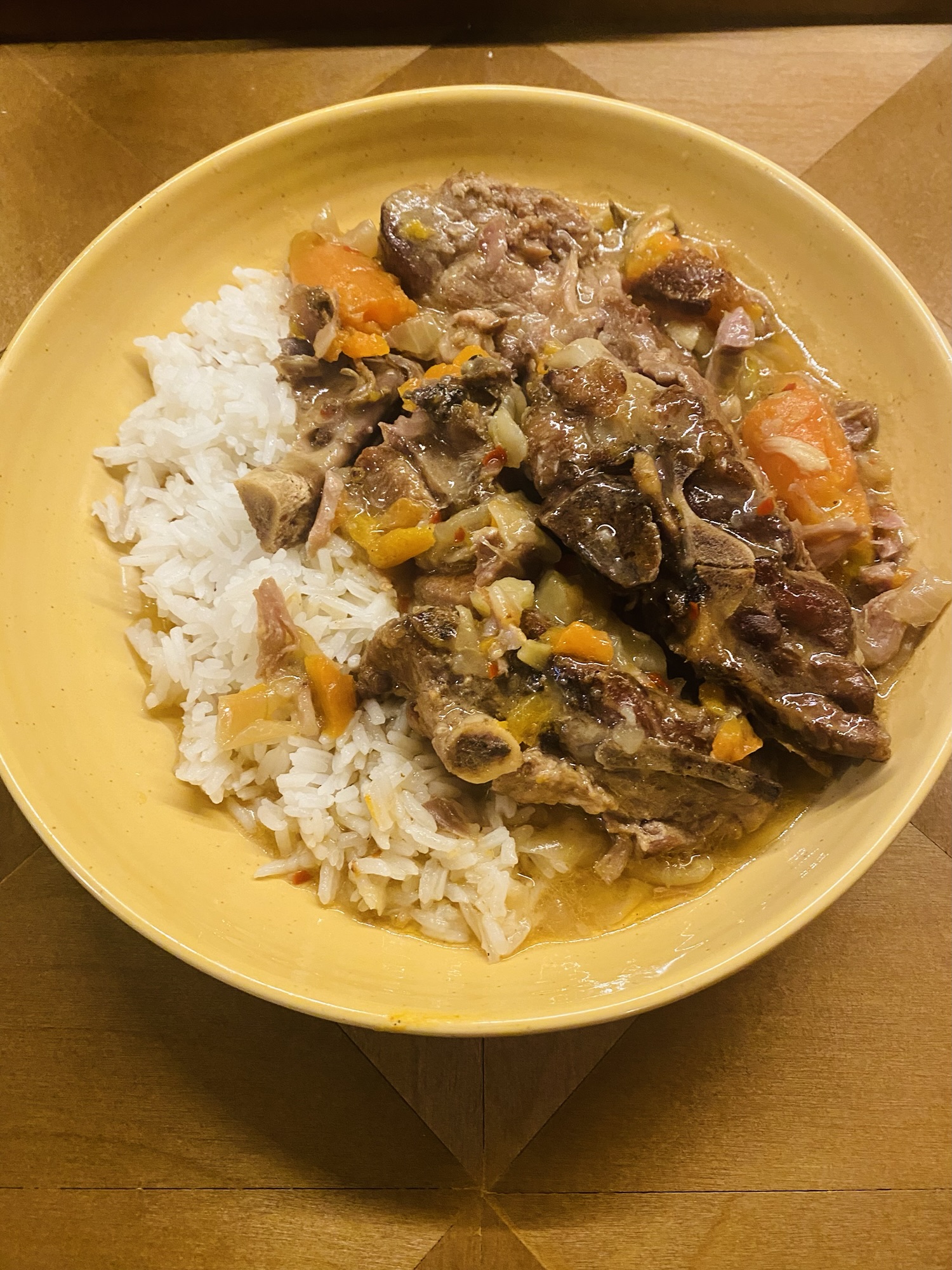
Southern-style pork neck bones are slow-cooked comfort at its finest. Rich, savory, and deeply satisfying. This dish leans into classic Southern technique, building layers of flavor through browning, patience, and simple pantry spices. The result is tender, fall-off-the-bone pork in a hearty, soul-warming gravy that feels both nostalgic and grounding.


Featured Standouts
Pork Neck Bones
These are more than just a cut of meat; they are the true backbone of deep, slow-developed flavor and richness. Rich in collagen, fat, and bone marrow, they release an unparalleled depth of flavor into the braising liquid as they cook down over hours. This slow rendering process is what gives the final gravy its signature full body and velvety mouthfeel.
Yellow Onion
Serving as the crucial aromatic anchor, the yellow onion doesn’t just add a savory layer; it builds the fundamental savory base and natural sweetness. Sautéing the onion until deeply caramelized is the first step in creating a complex fond that will dissolve into the broth, lending a roundness and subtle sugary note to balance the richness of the pork.
Garlic
A quintessential component in Southern cooking, garlic is introduced to add depth and a fragrant aroma without ever overpowering the core pork flavor. When gently fried it infuses the dish with a warm, pungent backdrop that complements the earthiness of the bay leaves and the richness of the pork.
Chicken Broth
This liquid component is vital, as it creates a full-bodied, comforting gravy. While water could be used, starting with a quality chicken broth immediately layers in a savory, umami note that elevates the entire dish. As the neck bones simmer, the broth reduces, concentrates, and is enriched by the rendered pork collagen, transforming into a thick, mouth-coating sauce.
Bay Leaves
Often underestimated, bay leaves are essential for bringing subtle herbal warmth and balance. They introduce a faint menthol and tea-like aroma that cuts through the fat and richness of the pork, providing a necessary, slightly aromatic counterpoint that prevents the dish from tasting overly heavy.
TIPS & TRICKS FOR THE BEST SOUTHERN STYLE PORK NECK BONES
Color Equals Flavor
Take your time browning each component. color equals flavor in this recipe. This step is non-negotiable. Whether searing the neck bones or sautéing the onions, deep browning (the Maillard reaction) creates hundreds of new flavor compounds. A rich brown crust on the meat and deep caramelization on the onions will translate directly into a profound depth of flavor in the finished broth. Do not rush this stage, as a light sear will result in a pale, thin-tasting gravy.
Do Not Overcrowd
Do not overcrowd the pan when searing; work in batches for a proper crust. When the pan is too full, the temperature drops rapidly, and the meat begins to steam rather than sear. Steaming prevents the formation of that crucial brown crust. Working in smaller batches ensures high heat is maintained, leading to an even, dark, and flavorful exterior on every piece of pork.
Garlic Protection
Leave the garlic skins on while frying to prevent burning and bitterness. Raw garlic contains compounds that can easily burn and turn acrid under high heat. Frying the cloves with their skins on acts as a protective barrier, allowing them to gently soften and infuse the oil without burning. The skins can be easily removed before the long simmer. This step ensures you get the aroma without the harshness.
Low and Slow
Simmer low and slow; rushing will keep the meat tight instead of tender. The magic of neck bones lies in transforming tough, collagen-rich connective tissue into unctuous gelatin. This molecular transformation only happens over a period of hours at a gentle simmer (just a bare ripple). A rapid boil will toughen the muscle fibers and cause the meat to seize up. Dedicate the time necessary for the meat to fall-off-the-bone tender.
Adjusting Seasoning
Taste and adjust seasoning near the end, once the broth has reduced. Salt and pepper should be added incrementally throughout the cooking process, but the final, critical adjustment must happen once the liquid has reduced and concentrated. If you fully season the broth at the beginning, by the time it reduces by a third or more, the salt will become overwhelming. Wait until the gravy has achieved its final consistency to perfect the salt, pepper, and potential heat (e.g., cayenne pepper).
Inclusive Adaptations
Garlic Preparation
Instead of peeling and mincing fresh garlic, which can be challenging, utilize pre-peeled garlic cloves or readily available garlic paste (in a tube or jar). This significantly reduces the fine motor control required for a key aromatic ingredient. Consider using a small, sturdy rocker knife or a food processor for other chopping tasks.
Opening Jars/Containers
Employ tools such as non-slip jar openers, automatic jar openers, or rubber grippers to assist in opening tightly sealed containers and jars, making ingredients easily accessible.
Thickening Agents
When the recipe calls for a thickener, such as all-purpose wheat flour, substitute it with gluten-free flour (like rice flour, corn flour, or a commercial blend) or prepare a simple cornstarch or arrowroot slurry. This ensures the dish remains suitable for those with celiac disease or gluten sensitivities without compromising the desired gravy consistency.
Sodium Control
To accommodate sodium-sensitive diets or hypertension concerns, opt for low-sodium broth (chicken, vegetable, or beef), or a homemade unsalted stock. Be mindful of other high-sodium ingredients like bacon or seasoning blends, and use fresh herbs and spices for flavor enhancement instead of relying solely on salt.
Modifying Chopping and Slicing
Cut vegetables and aromatics (like onions, carrots) into larger, more manageable pieces. Larger cuts are not only easier to grip and chop with a stable cutting surface but are also more visible, which is helpful for individuals with visual impairments. Use a contrasting color cutting board to improve visibility.
Utilizing a Slow Cooker
After the initial browning or searing steps (which can often be done quickly), transfer the ingredients to a slow cooker. This allows the dish to simmer to perfection with minimal monitoring, drastically reducing the amount of time required to stand over a stovetop.
Batch Preparation
Consider preparing components (like chopping vegetables) ahead of time or purchasing pre-chopped ingredients to break the cooking process into smaller, less taxing sessions.
Ergonomic Kitchen Setup
Arrange the cooking area to have essential tools and ingredients within easy reach. Use anti-fatigue mats to cushion the floor for prolonged standing, and have a sturdy stool available for resting while stirring or supervising the cooking process.
EQUIPMENT NEEDED TO MAKE THIS RECIPE
Dutch oven
Tongs
Large bowl
Wooden spoon or whisk
Cutting board
Chef’s knife
Similar Ingredients To
Red Chili Lime Fried Shrimp
Cajun Black Pepper Shrimp
Za’atar Broiled Shrimp & Potatoes + Orange Pink Peppercorn Cocktail Sauce
Enjoy This Recipe With
GRILLED SHRIMP W/ CAJUN BUTTER
GARLIC BUTTER SHRIMP SCAMPI
CAJUN BARBECUE CRAB LEGS
Recipe


Southern Style Pork Neckbones
Ingredients
Method
- Season the pork neck bones evenly with salt.
- In a Dutch oven over medium heat, add the canola oil. Fry the garlic cloves with skins on until browned, about 5–10 minutes. Remove and set aside. Once cooled removed the skins.
- Add the sliced onions to the oil, increase heat slightly, and cook until deeply browned. Remove and place with the garlic.
- Working in batches, sear the neck bones until a hard golden-brown crust forms on all sides. Transfer to a separate bowl and repeat until all are browned.
- Add carrots to the remaining oil and cook until lightly browned. Stir in the flour and whisk until smooth, cooking out the raw flour taste.
- Slowly add chicken broth while whisking. Add potatoes, bay leaves, garlic powder, black pepper, reserved garlic and onions, and return the neck bones to the pot. Add additional broth if needed to mostly cover.
- Bring to a boil, cover, reduce to a simmer, and cook for 1–2 hours until the meat is fall-off-the-bone tender. Adjust seasoning if needed. The neckbones are done when the meat slightly pulls from the bone and the gravy is slightly thickened.