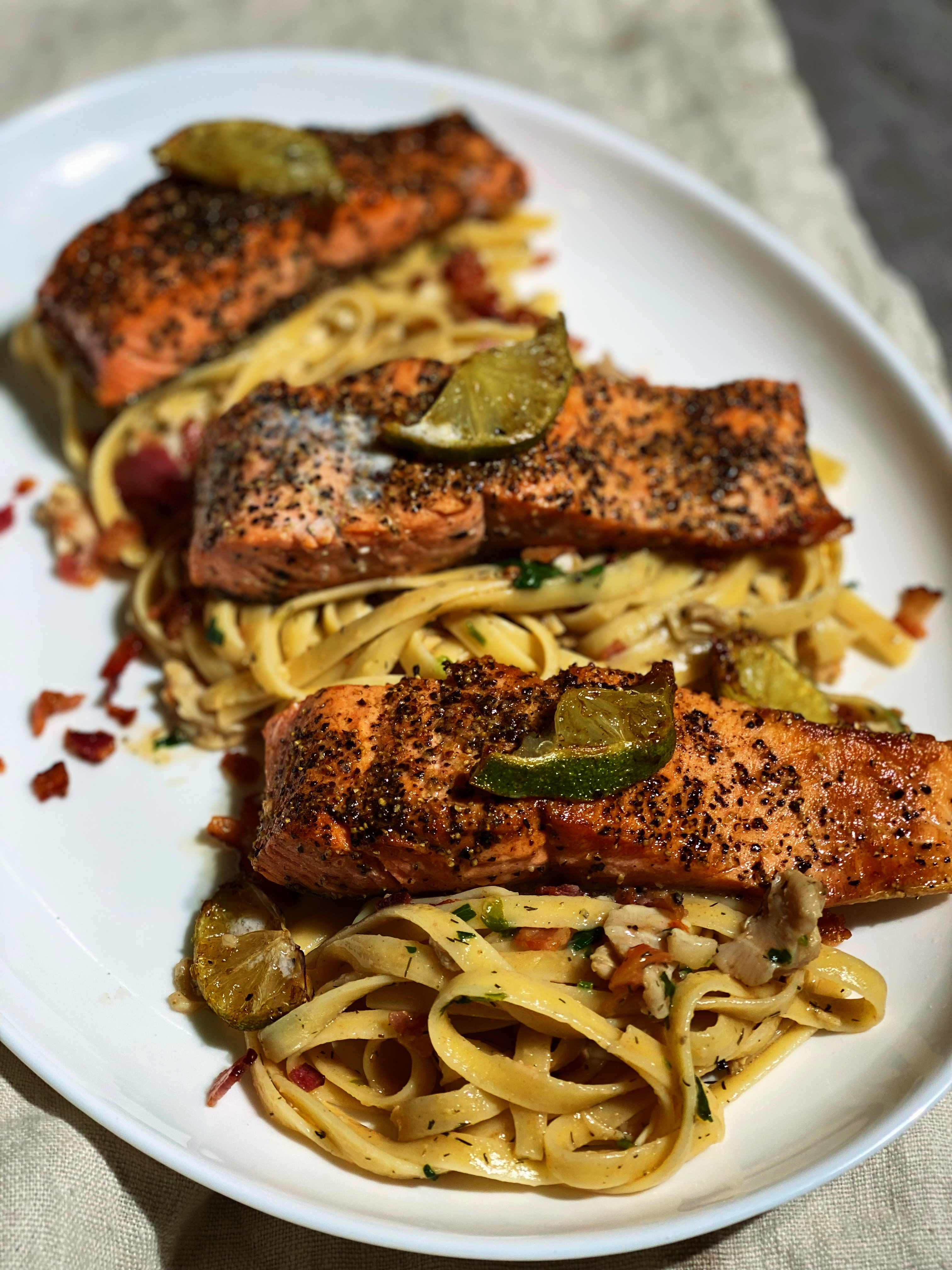
Crispy fried bacon and sweet clams simmered in a luscious garlic white wine sauce, tossed with al dente fettuccine noodles. Crowned with a perfectly pan-seared pepper crusted salmon filet.


FEATURED STANDOUTS
Bacon
Bacon has a unique and distinctive flavor that is a combination of salty, smoky, and umami-rich. It is made from pork belly or pork shoulder that has been cured and smoked, which gives it a complex and savory taste.
- Saltiness: Bacon is cured in salt, which gives it a salty flavor. This saltiness helps to balance out the other flavors in the meat and makes it a good match for sweet or sour ingredients.
- Smokiness: Bacon is smoked over wood chips or sawdust, which gives it a smoky flavor. The type of wood used for smoking can affect the flavor of the bacon, with hickory and applewood being two popular choices.
- Umami: Bacon is a good source of umami, which is a savory flavor that is often associated with meat, cheese, and mushrooms. Umami is responsible for the rich and satisfying flavor of bacon.
Sweet Clams
Clams possess a delicate and mildly sweet flavor with a hint of brininess, resembling a gentle oceanic taste. These mollusks, when canned, become a valuable source of protein, iron, and vitamin B12, making them a nutritious choice.
Butter
Butter adds a rich, creamy flavor to pasta dishes. It helps to bind the ingredients together and create a smooth, velvety sauce. Butter also adds a subtle sweetness to the dish, which can help to balance out other flavors, like garlic.
When used in combination with other ingredients, such as cheese or herbs, butter can help to create a complex and flavorful sauce that will elevate the fettuccine to the next level.
White Wine
Dry white wine has a crisp, acidic flavor that can add brightness and complexity to pasta dishes. It is often used in light, summery pasta dishes, such as those made with seafood or vegetables. Dry white wine can also be used to deglaze a pan after sautéing meat or vegetables, adding flavor to the dish.
Some key flavor components of dry white wine:
Acidity: Dry white wine has a high acidity, which can help to cut through the richness of pasta dishes. This acidity also helps to balance out the other flavors in the dish, such as salt and fat.
Fruitiness: Dry white wine often has a fruity flavor, which can range from citrusy to stone fruit. The type of grape used to make the wine will affect the fruitiness of the wine.
Minerality: Dry white wine can also have a mineral flavor, which can add complexity and depth to the wine. This minerality is often influenced by the soil in which the grapes are grown.
Dry white wine is a versatile ingredient that can be used in a variety of pasta dishes. Its crisp, acidic flavor can help to brighten up a dish, while its fruitiness and minerality can add complexity and depth.
Fettuccine
Fettuccine is a type of pasta that is made from long, flat noodles. It is similar to linguine, but is slightly wider. Fettuccine is often used in dishes that have a creamy or tomato-based sauce.
Salmon
Salmon is a type of fish that is known for its rich, oily flavor. It is a popular choice for sushi, sashimi, and other seafood dishes. Salmon can be cooked in a variety of ways, including baking, grilling, and pan-frying.
The flavor of salmon can vary depending on the species of fish, as well as the way it is cooked. However, some of the common flavor components of salmon include:
- Umami: Salmon is a good source of umami, which is a savory flavor that is often associated with meat, cheese, and mushrooms. Umami is responsible for the rich and satisfying flavor of salmon.
- Saltiness: Salmon is a saltwater fish, so it naturally has a salty flavor. This saltiness helps to balance out the other flavors in the fish and makes it a good match for a variety of sauces and seasonings.
- Fishy: Salmon has a slightly fishy flavor, which is common to all types of fish. This flavor is more pronounced in raw salmon than in cooked salmon.
- Fatty: Salmon is a fatty fish, which gives it a rich and oily texture. The fat in salmon also helps to keep the fish moist and flavorful when it is cooked.
TIPS & TRICKS FOR THE BEST CLAM AND BACON FETTUCCINE
Fresh Clams vs. Canned Clams
When it comes to cooking with clams, you have two main options: fresh clams and canned clams. While both types of clams have their own unique advantages and disadvantages, the best choice for your recipe will depend on a few factors, such as availability, budget, and personal preference.
Fresh Clams
- Pros:
- Fresh clams have a sweeter, more delicate flavor than canned clams.
- They are also more tender and have a better texture.
- Fresh clams are a good source of protein, iron, and vitamin B12.
- Cons:
- Fresh clams are more expensive than canned clams.
- They are also more difficult to find, especially if you live in an area that is not near the ocean.
- Fresh clams require more preparation time than canned clams. You will need to shuck them before you can use them.
Canned Clams
- Pros:
- Canned clams are more affordable than fresh clams.
- They are also more widely available, so you can find them at most grocery stores.
- Canned clams are very convenient to use. They are already shucked and cooked, so you can simply open the can and add them to your recipe.
- The brine from the can can be added to the recipe for more added flavor.
- Cons:
- Canned clams have a stronger, more briny flavor than fresh clams.
- They are also not as tender as fresh clams.
- Canned clams are not as good a source of nutrients as fresh clams.
Which Type of Clam Should You Use?
Ultimately, the best type of clam to use for your recipe will depend on your personal preferences and the factors listed above. For this recipe canned clams work best.
Here are a few tips for using fresh clams and canned clams:
- Fresh Clams:
- When buying fresh clams, look for ones that are alive and have tightly closed shells.
- Store fresh clams in the refrigerator for up to 2 days before using them.
- To shuck fresh clams, simply insert a clam knife into the hinge of the shell and pry it open.
- Reserve the juice in the clams for the dish. Strain the juice before adding to the dish to make sure there aren’t any small rocks.
- Canned Clams:
- When buying canned clams, look for ones that are packed in brine or water.
- Store canned clams in a cool, dry place.
- Canned clams can be used immediately without any preparation.
- Reserve the brine from the can.
With a little planning, you can use either fresh or canned clams to create delicious and flavorful seafood dishes.
Types of White Wine
There are many different types of white wine, each with its own unique flavor profile. Some of the most popular types of white wine include:
- Chardonnay: Chardonnay is a full-bodied wine with flavors of apple, pear, and citrus. It is often aged in oak barrels, which can add notes of vanilla, butter, and toast.
- Sauvignon Blanc: Sauvignon Blanc is a light- to medium-bodied wine with flavors of grapefruit, lime, and green apple. It is often unoaked, which preserves its fresh, fruity flavors.
- Pinot Grigio: Pinot Grigio is a light- to medium-bodied wine with flavors of white peach, apricot, and pear. It is often unoaked, which preserves its delicate flavors.
- Riesling: Riesling is a sweet or semi-sweet wine with flavors of apple, peach, and apricot. It is often made from grapes that have been grown in cold climates, which gives it a higher acidity. Not great to cook with.
- Moscato: Moscato is a sweet, light-bodied wine with flavors of grape, peach, and orange blossom. It is often made from grapes that have been grown in warm climates, which gives it a lower acidity. Do not cook with moscato.
The type of white wine you choose for a recipe will depend on the flavors of the other ingredients. For example, a Chardonnay would pair well with a rich, creamy pasta dish, while a Sauvignon Blanc would pair well with a light, seafood dish.
EQUIPMENT NEEDED TO MAKE THIS RECIPE
- Large pot
- Colander
- Cutting board
- Chef’s knife
- Measuring cups and spoons
- Tongs
- Spatula
- Wooden spoon
- Serving bowl
SIMILAR INGREDIENTS TO
Avocado Wasabi Pasta Salad
Meat & Cheese Lasagna + Stewed Garlic Olives
Roasted Lemon Chicken + Black Truffle Pasta
ENJOY THIS RECIPE WITH
SMORES CHEESECAKE BARS
ROCKY ROAD CHOCOLATE BUNDT CAKE
PAN AU CHOCOLAT BREAD PUDDING

Crispy fried bacon and sweet clams simmered in a luscious garlic white wine sauce, tossed with al dente fettuccine noodles. Crowned with a perfectly pan-seared pepper crusted salmon filet.
INGREDIENTS
- 1 pound fettuccine noodles
- 1/2 pound bacon, diced
- 1 small onion, chopped
- 6 cloves garlic, minced
- 1 (10 ounce) can of clams, save brine for pasta sauce
- 1/2 cup white wine
- 1/2 cup butter
- 1 tsp Red Pepper Flakes
- 1/2 cup grated Parmesan cheese
- ¼ cup Salty Pasta water, reserved from boiled pasta
- Salt and pepper to taste
- 4 Salmon Filets
- 1 Lemon or Lime, sliced or wedged
INSTRUCTIONS
- Cook the fettuccine noodles according to the package directions, reserve some salty water for the pan sauce.
- While the noodles are cooking, cook the bacon in a large skillet over medium heat until crispy.
- Add the onion and garlic to the skillet and cook until softened.
- Add the clam juice, pasta water, white wine, butter, red pepper flakes, salt, and pepper to the skillet.
- Bring to a simmer and cook for 10 minutes.
- Add the clams, cooked fettuccine noodles, and parmesan cheese to the skillet and toss to combine.
- Pat the salmon filets dry, and season generously with salt and pepper.
- In a hot cast iron skillet add in 1Tb each cooking oil and butter.
- Sear salmon on both sides for 3 minutes.
- Toss the lemon or lime in the pan for 30 seconds ( be careful it will pop)
- Crown the salmon over the pasta and top with lime.

LET’S STAY CONNECTED
[ss_social_follow networks=”Pinterest”]