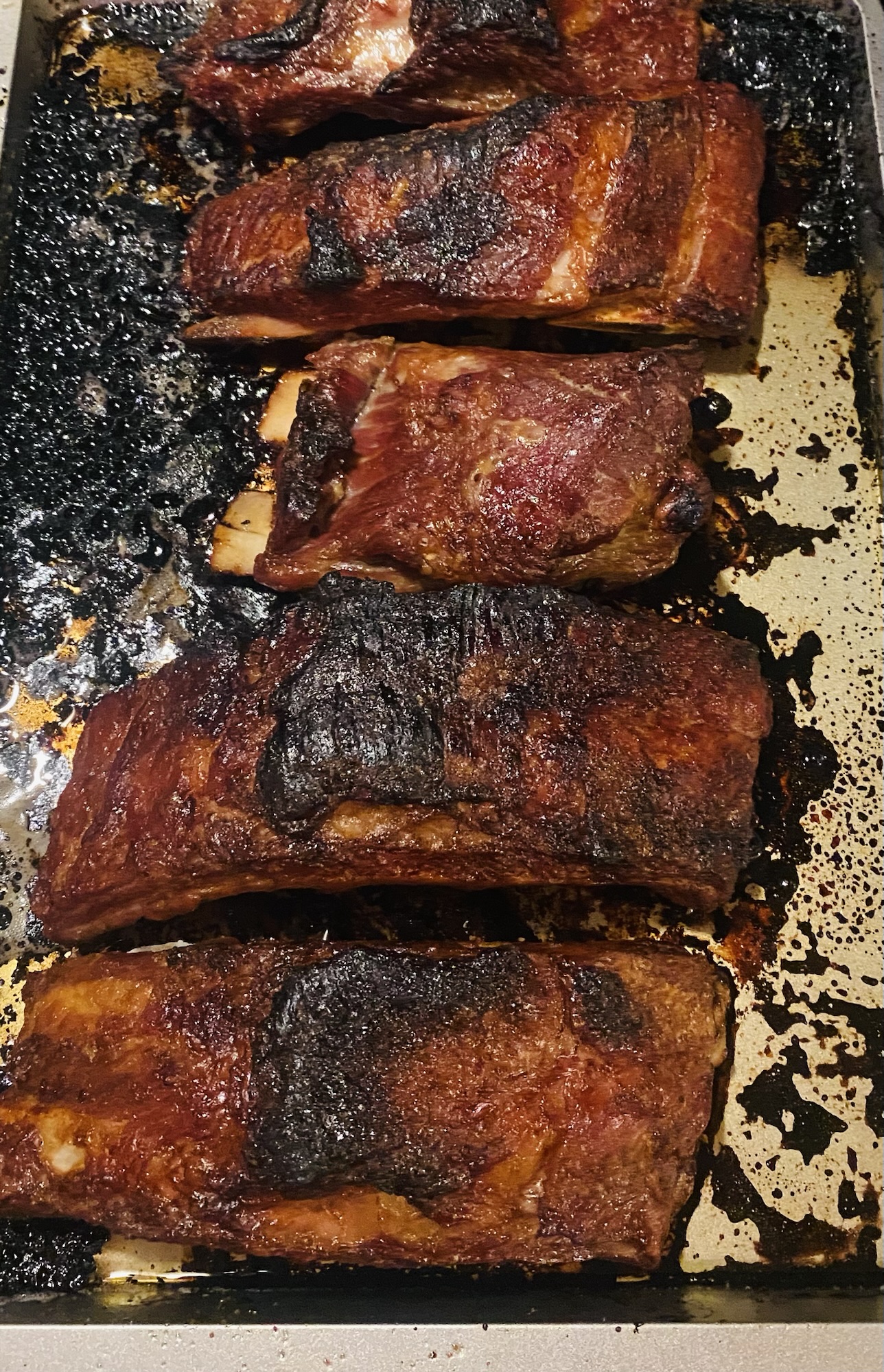
Salt & Sugar Ribs are proof that restraint can be just as bold as excess. This is the opposite of a Dalmatian rub minus the black pepper. Just salt and sugar working together to create a deep, golden crust and pork that tastes intensely porky. It’s minimal, intentional, restaurant tier and craveable.


Featured Standouts
Pork Spare Ribs
The cut of meat is paramount. Pork Spare Ribs are a preferred choice due to their inherent qualities. This is a particularly rich, fatty cut sourced from the belly and lower chest area of the hog. This higher fat content is not a drawback; rather, it is what makes the spare rib so desirable. During the long cooking process, the fat slowly renders, basting the meat from within, which results in ribs that are incredibly tender, moist, and deeply flavorful.
Salt
Salt is more than just a flavor enhancer; it is a critical agent in meat preparation. Its primary function is to sharpen flavor, bringing out the natural, savory depth of the pork. However, its importance extends to texture through the process of osmosis. Salt actively drives moisture to the surface of the meat. When used as a pre-cook rub, this action draws out excess moisture, which can then interact with the rub to create a flavorful brine on the exterior. This process is essential for setting the stage for a crisp, well-seasoned exterior crust.
Sugar
Sugar serves a dual purpose, acting as both a flavor balancer and a critical contributor to the rib’s appetizing appearance. Its primary role is to balance salinity, mellowing the sharpness of the salt and creating a more rounded, complex profile that hits multiple taste points. A secondary, but equally important, role is its contribution to the texture and color of the crust. As the ribs cook under heat, the sugar melts and undergoes the Maillard reaction and caramelization, which builds a caramelized crust. This process imparts a desirable stickiness, a beautiful mahogany-brown color, and a final layer of deep, slightly sweet flavor that perfectly contrasts the savory pork and salt.
TIPS & TRICKS FOR THE BEST SALT & SUGAR RIBS
Use double-cut spare ribs for a meatier bite and better crust.
Opting for double-cut spare ribs ensures each piece is substantial, providing a higher meat-to-bone ratio. The extra thickness helps retain moisture during the cooking process and offers a larger surface area, which is crucial for developing that desirable, deep-brown, caramelized crust—the signature of this recipe.
Remove the membrane completely so seasoning penetrates evenly.
This thin, translucent membrane (often called silverskin) on the bone-side of the ribs does not render during cooking and becomes tough and chewy. Crucially, it acts as a barrier, preventing the essential salt and sugar seasoning from penetrating the meat. Take the time to remove it fully—it’s a critical step for tender, evenly seasoned ribs. Use a butter knife to lift an edge and a paper towel for grip to pull it off in one sheet.
Don’t add pepper or spices, the purity is the point.
The beauty of this recipe lies in its elegant simplicity. The goal is to highlight the natural sweetness of the pork, enhanced by the caramelization of the sugar and the flavor-boosting power of the salt. Introducing complex spices or pepper can muddy the flavor profile and distract from the clean, balanced taste that defines true Salt & Sugar Ribs. Stick solely to high-quality coarse salt and granulated sugar.
Let ribs rest 5–10 minutes before cutting to keep juices in.
Once the ribs are cooked to perfection, resistance is key. Immediately slicing into hot meat allows the internal juices, which are under pressure, to run out, resulting in dry ribs. By allowing them to rest ideally tented loosely with foil the muscle fibers relax, and the moisture is reabsorbed throughout the meat, guaranteeing every slice is as tender and juicy as possible.
If browning too fast, loosely tent with foil for the last stretch.
Achieving a deep, golden-brown crust without overcooking the interior requires careful heat management. If you notice the sugars are caramelizing and darkening too rapidly, especially on the top pieces, loosely covering the ribs with a sheet of aluminum foil will reflect some of the heat. This allows the internal temperature to continue rising until the meat is tender without burning the precious outer crust.
Inclusive Adaptations
Strain Reduction in Cutting
Utilize kitchen shears (or poultry shears) instead of a traditional chef’s knife for cutting the ribs into portions. The ergonomic design and leverage of shears drastically reduce the force and strain required on the hands and wrists. Ensure the shears are sharp and have a comfortable grip.
Sodium Management
For individuals sensitive to high sodium intake, substitute traditional salt with lower-sodium alternatives. Options include potassium chloride-based salt substitutes, or a blend of low-sodium salt and flavor enhancers like lemon zest or garlic powder to maintain a savory profile without excessive sodium. Adjust quantity to taste, keeping in mind the flavor difference.
Sugar Alternative
If a specific sugar profile is desired or if granulated sugar needs to be avoided (e.g., for flavor preference or a lower glycemic index), substitute it with coconut sugar. Coconut sugar offers a similar sweetness level but with a slight caramel note. Other suitable swaps, depending on dietary need, could include brown sugar for depth or a sugar-free substitute, adjusting the liquid content of the rub or glaze as needed.
EQUIPMENT NEEDED TO MAKE THIS RECIPE
Rimmed baking sheet
Sharp knife or kitchen shears
Small mixing bowl
SIMILAR INGREDIENTS TO
Coffee Braised Ribs w/ Peppercorn Grits
Smoked Ribs + Green Onion Gremolata
Deep Fried Ribs
ENJOY THIS RECIPE WITH
EDAMAME GRAPEFRUIT SALAD
DIRTY RICE STUFFED ONIONS
BROCCOLI AND SHISHITO PEPPER SLAW
Recipe


Salt & Sugar Ribs
Ingredients
Method
- Preheat your oven to 400°F (200°C).
- In a small bowl, combine the salt and sugar.
- Prepare the ribs by removing the membrane from the back of the rack.
- Cut the rack into double-rib portions, or leave it whole, as desired.
- Rub the salt and sugar mixture evenly over both sides of the ribs.
- Place the prepared ribs on a baking sheet lined with foil.
- Roast for 1 hour and 20 minutes, or until the crust is golden brown and the meat has receded from the bone ends.
- Allow the ribs to rest briefly before slicing and serving.